
Wooden vs plastic pallets
Plastic is not better than timber. It is better at particular jobs — and the deciding factor is simpler than most comparisons make it look.
· 3 min read · Khan Pallets
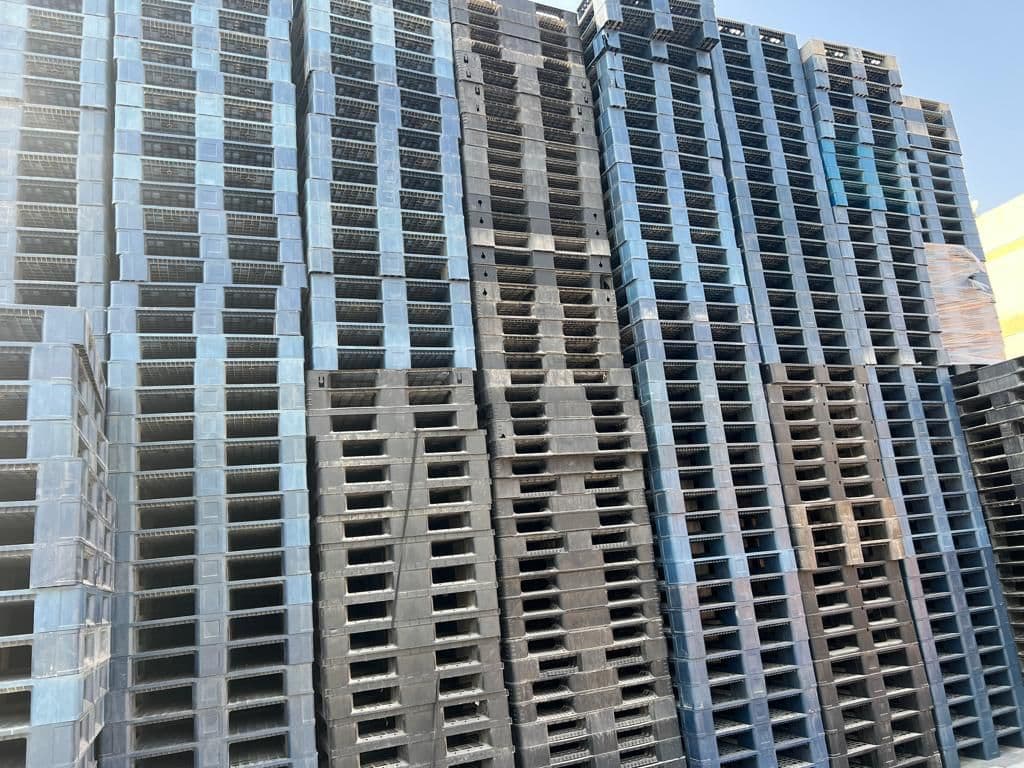
Most comparisons of wood and plastic list a dozen attributes and leave you to weigh them. In practice one question settles it for the majority of operations, and everything else is a tiebreaker.
The question that decides it
Do your pallets come back to you?
If a pallet leaves on a truck and you never see it again, its unit cost is the whole cost. Timber wins, and it is not close. If a pallet cycles inside your own network — plant to warehouse, warehouse to store, back again — then unit cost barely matters and cost per trip is what you are actually buying. That is where plastic starts to win.
Cost per trip, worked through
Take a plastic pallet costing roughly four times a timber one — a realistic ratio for equivalent sizes. Whether that is expensive depends entirely on trip count:
| Scenario | Timber | Plastic | Better choice |
|---|---|---|---|
| One-way export, 1 trip | 1.0 | 4.0 | Timber, decisively |
| Regional delivery, ~5 trips | 0.4 | 0.8 | Timber |
| Closed loop, ~30 trips | 0.25 | 0.13 | Plastic |
| Closed loop, ~100 trips | 0.2 | 0.04 | Plastic, decisively |
The figures are illustrative ratios, not a quote — but the shape of the curve is the real point. Timber is assumed to be repaired a few times and eventually retired; plastic is assumed to survive far more cycles. Somewhere between five and fifteen trips, the two lines cross. Knowing roughly where your operation sits on that curve is worth more than any feature list.
Where plastic clearly wins
- Washdown environments — plastic is non-porous and can be pressure-washed or steam-cleaned between loads. Timber cannot.
- Food, dairy and pharmaceutical work — the hygiene case is usually decisive on its own, regardless of cost per trip.
- Automated lines and conveyors — nothing warps, no nail works loose, nothing snags shrink wrap.
- Export where treatment is a delay — plastic is not wood packaging, so ISPM-15 does not apply to it at all.
Where timber clearly wins
- One-way freight — anything you will not see again.
- Heavy and dense loads — stone, steel, tiles and machinery, where a reinforced timber build carries more for less.
- Repairability — a broken deck board is a ten-minute fix. A cracked plastic pallet is generally scrap.
- Custom sizes — timber can be built to any footprint. Plastic comes in the sizes its moulds exist for.
- Grip — loads shift less on a timber deck than on smooth plastic, which matters more than people expect on a long road leg.
The ISPM-15 difference
This is the one genuinely absolute distinction. ISPM-15 governs wood packaging material, because the risk it addresses is timber pests. Plastic falls outside the standard entirely — no heat treatment, no stamp, no treatment certificate, and nothing for an inspector to reject on timber grounds.
That is a real advantage, but it is worth keeping in proportion. We heat treat and stamp in-house, so for our timber customers ISPM-15 is a step in production rather than a delay. It becomes a deciding factor mainly when shipments are urgent and unpredictable.
What most operations actually do
They run both. Plastic inside the closed loop where hygiene and cycle count justify it; timber for everything going out of the door one-way. Splitting the fleet by job, rather than standardising on one material for tidiness, is almost always the cheaper answer over a year.
Where to next
Written by the team at Khan Pallets, the trading name of Saqer Al Khan Wooden Ind LLC — a wooden pallet manufacturer and supplier based in Al Sajaa, Sharjah, delivering across all seven emirates.
More guides
Keep reading
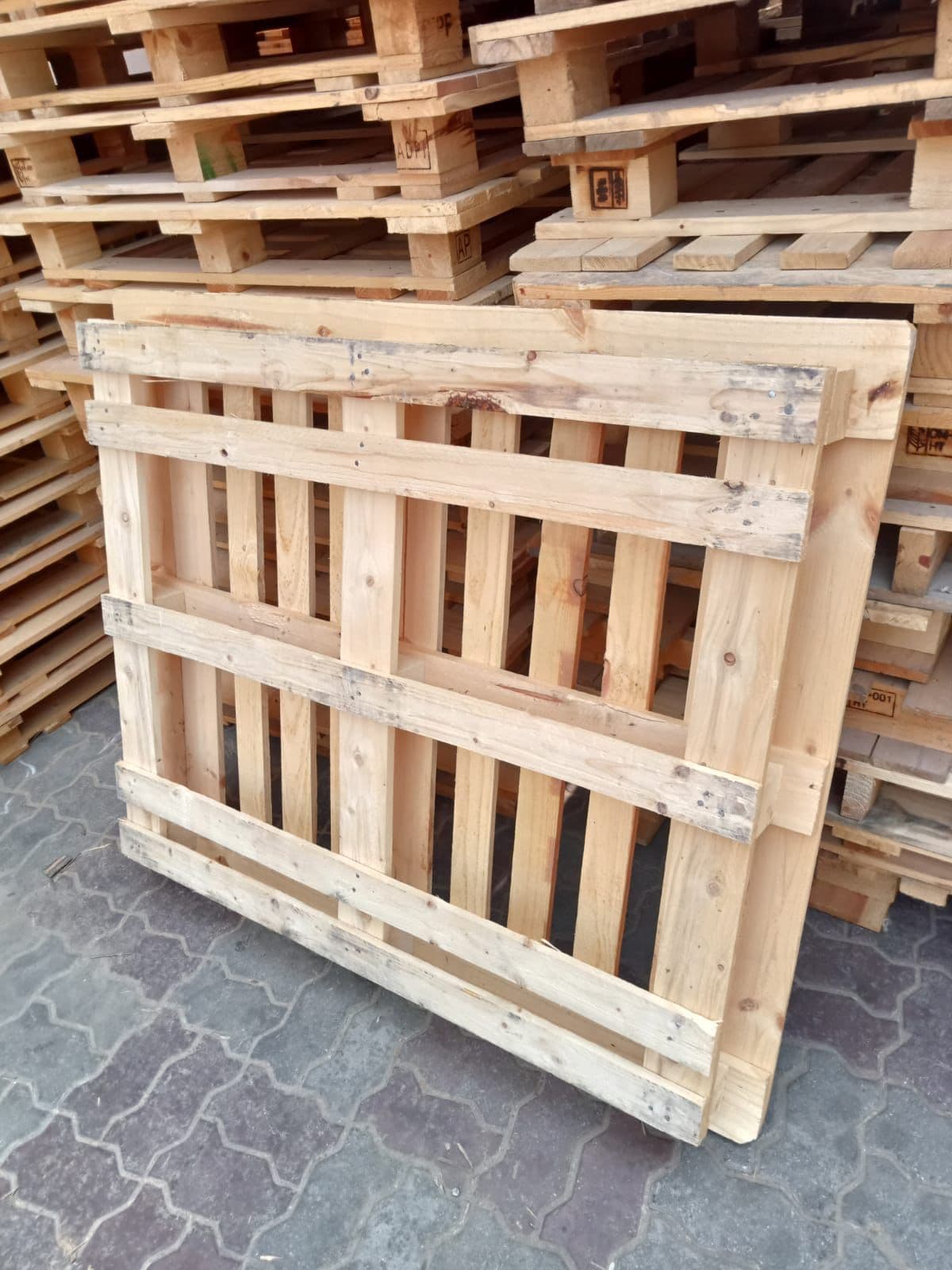
What is a wooden pallet?
The flat timber base that almost every shipment in the UAE moves on — what it is made of, how it is built, and which parts actually matter when you are buying.
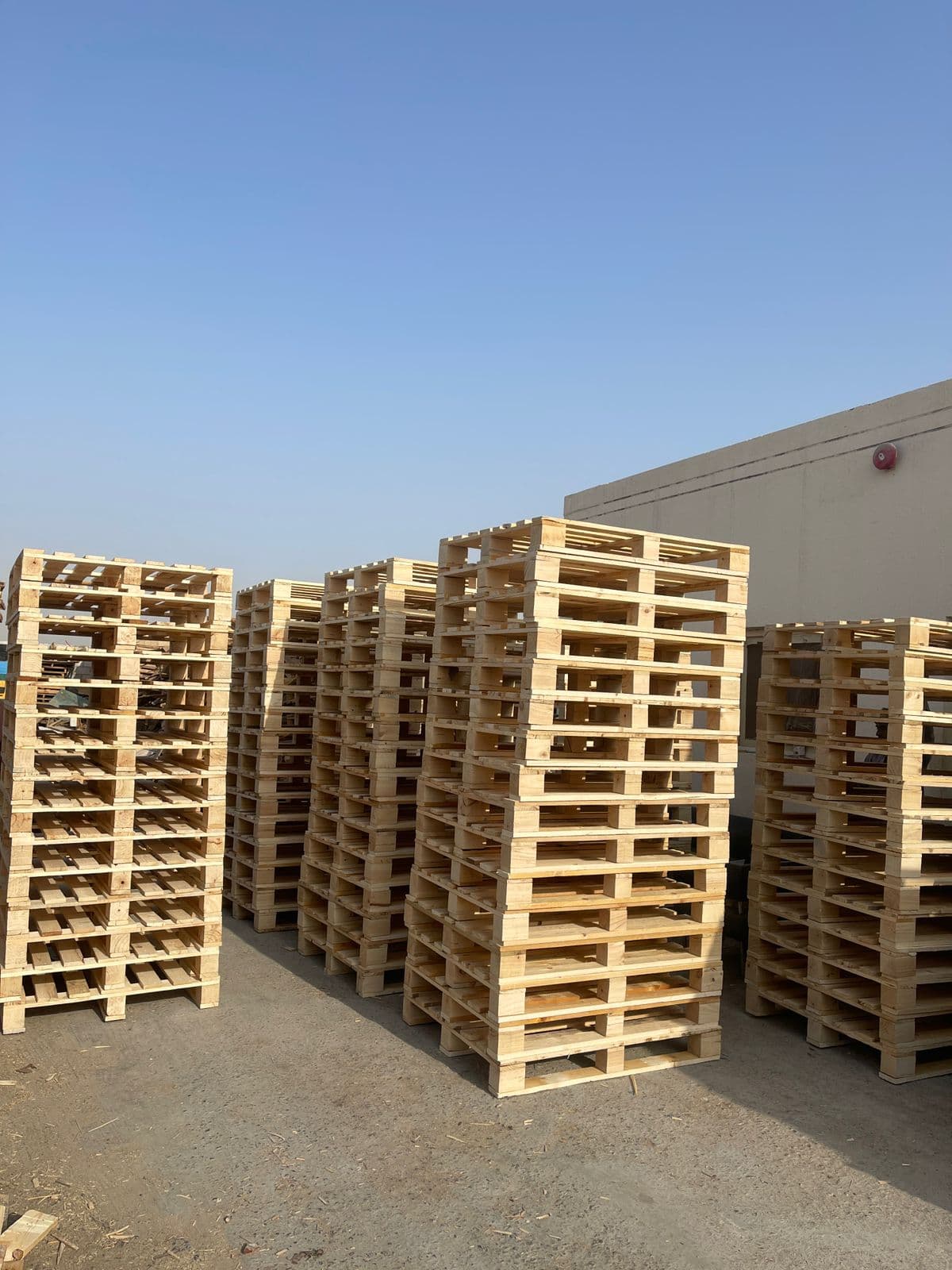
Standard pallet sizes in the UAE
Every size we hold, in centimetres and millimetres, plus how many fit a container, what suits racking, and when a custom size is cheaper than forcing a standard one.
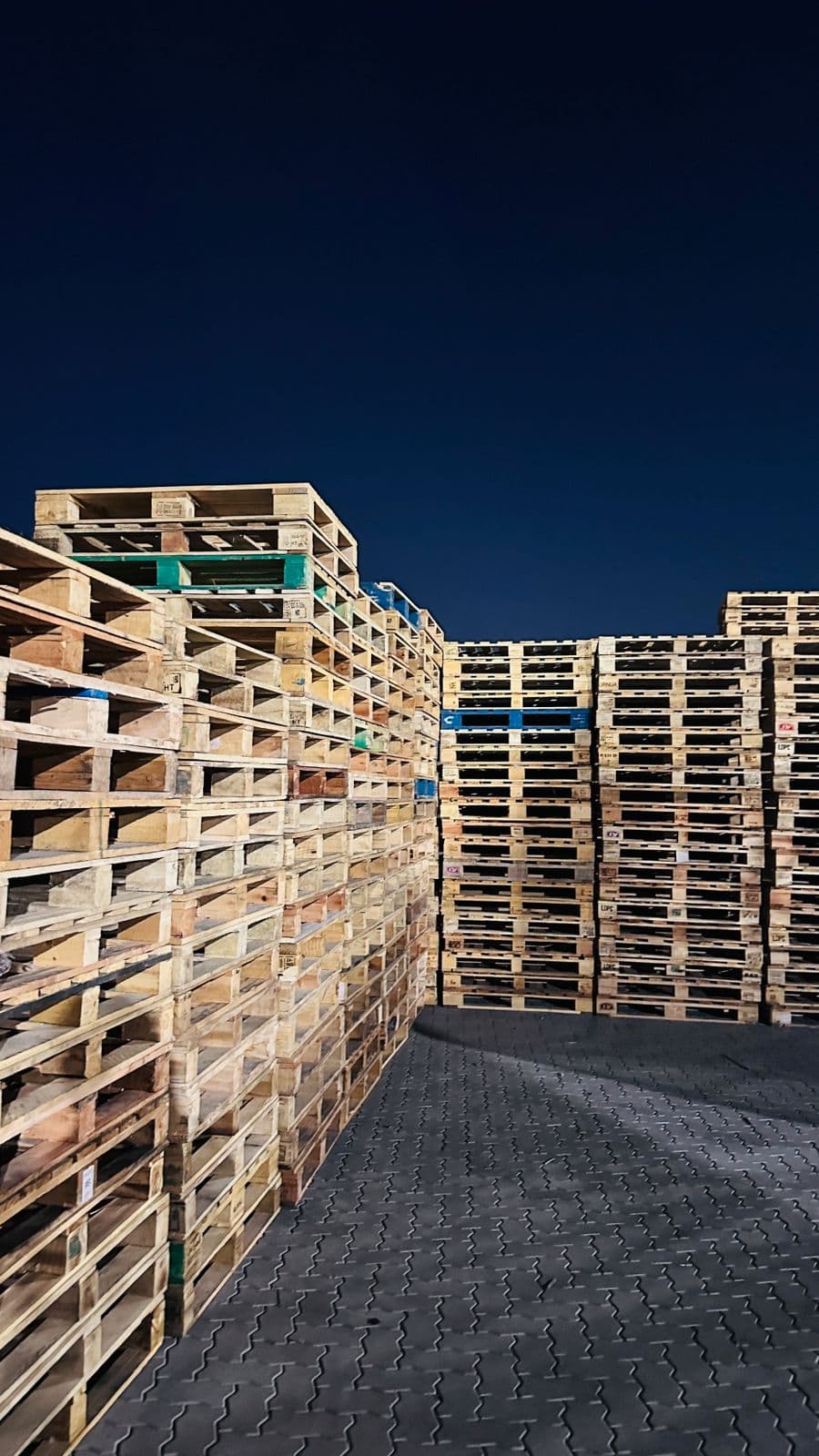
Export pallet requirements
What a pallet needs before it can leave the country, what the stamp on the side actually says, and the handful of avoidable mistakes that get consignments held at the port.
Ready to price it up?
Send the size, quantity and destination. We will confirm the build and the price, usually the same working day.