
Export pallet requirements
What a pallet needs before it can leave the country, what the stamp on the side actually says, and the handful of avoidable mistakes that get consignments held at the port.
· 4 min read · Khan Pallets
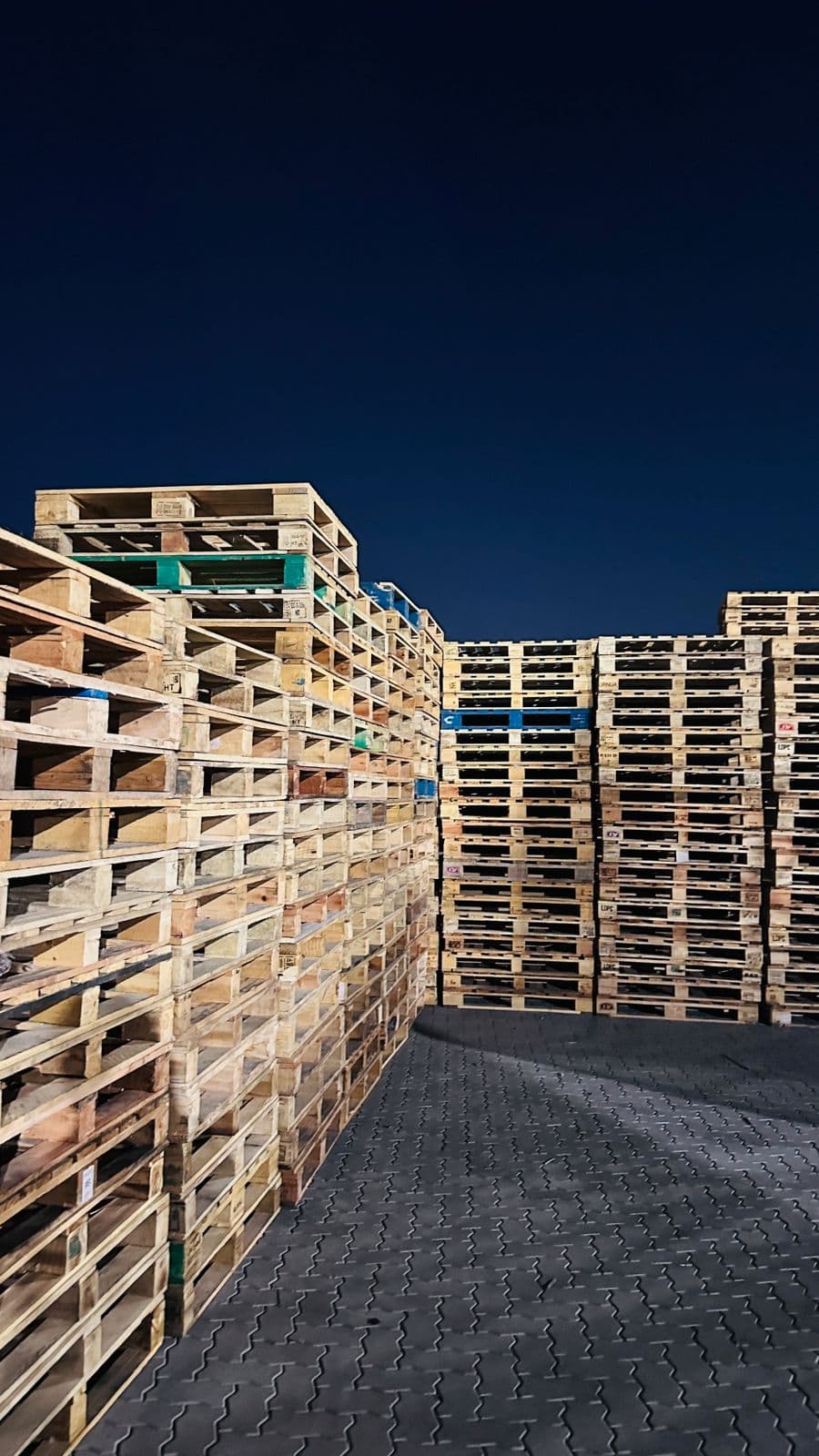
If timber packaging is leaving the UAE, it has to be treated and marked to ISPM-15. Not the goods — the packaging. Pallets, crates, cases, skids, dunnage and bracing timber all count. This catches people out: the shipment is compliant, the box the shipment sits on is not, and the whole consignment stops.
What ISPM-15 is
ISPM-15 is the international standard for wood packaging material moving between countries. Raw timber can carry insects and larvae that devastate forests where they are not native, so the standard requires the wood to be treated to kill them, and marked so any inspector anywhere can see it was.
Heat treatment means bringing the timber to 56°C at its core for at least 30 continuous minutes. It is not a surface scorch, and it is not something that can be done credibly after the fact with a stamp.
What the stamp actually says
The mark on the side of a compliant pallet is not a logo. Every element carries information:
- The IPPC symbol — the ear-of-wheat mark identifying it as an ISPM-15 treatment.
- Country code — `AE` for the UAE, using the two-letter ISO code.
- Producer registration number — the unique number of the facility that treated it. This is what makes the mark traceable.
- Treatment code — `HT` for heat treatment, `DH` for dielectric heating, `MB` for methyl bromide fumigation.
The mark must be legible, permanent, not transferable between pallets, and applied where it can be seen — normally on at least two opposite sides. It must not be red or orange, since those colours are reserved for hazard marking.
Heat treatment or fumigation?
Both satisfy the standard, but methyl bromide is an ozone-depleting substance and is being phased out worldwide. A growing number of destination countries will not accept `MB`-marked packaging at all. Heat treatment is what we use, what we stamp, and what destination ports increasingly expect as the default.
What is exempt
- Processed wood — plywood, OSB, particleboard and veneer are manufactured with heat and adhesive, which already destroys pests.
- Thin timber — wood packaging of 6 mm thickness or less.
- Plastic pallets — outside the standard entirely, since it governs wood. See wooden vs plastic pallets.
- Domestic movements — pallets that never cross a border do not need treating, and you should not be paying for it on them.
Why consignments actually get held
In our experience it is rarely anything exotic. It is almost always one of these:
- 1No mark at all — untreated pallets used for an export load by mistake.
- 2Illegible mark — worn, painted over, or stamped onto a board that has since been replaced.
- 3Bark still present — ISPM-15 requires debarked wood, and a strip of bark is visible evidence it is not compliant.
- 4Repaired with untreated timber — a treated pallet mended with an untreated board is no longer compliant, and re-marking it without re-treating is a serious offence.
- 5Missing treatment certificate — the pallets are fine but the paperwork for the consignment is not there.
- 6Live insects or visible damage — an inspector finding either will reject regardless of what the stamp says.
Ports this applies at
All of them. Anything containerised leaving Jebel Ali, Port Khalid or Hamriyah in Sharjah, Khalifa Port, Saqr Port in Ras Al Khaimah or the Port of Fujairah needs compliant wood packaging. The requirement is set by the destination country, not the port of loading — so it applies even on short regional routes.
The paperwork
The stamp travels on the pallet; the certificate travels with the consignment. We issue a treatment certificate per consignment, which is what a freight forwarder or customs broker will ask for. Keep it with the shipping documents rather than filing it separately — it is needed at the point it is questioned, not afterwards.
Getting it done
We treat and stamp in our own yard in Sharjah, which means export pallets do not wait on a third-party treatment slot. That covers new builds, and used stock that needs re-treating and re-stamping before it can be exported. See ISPM-15 heat treatment for how the service runs, or send us the consignment details and destination and we will confirm exactly what it needs.
Where to next
Written by the team at Khan Pallets, the trading name of Saqer Al Khan Wooden Ind LLC — a wooden pallet manufacturer and supplier based in Al Sajaa, Sharjah, delivering across all seven emirates.
More guides
Keep reading
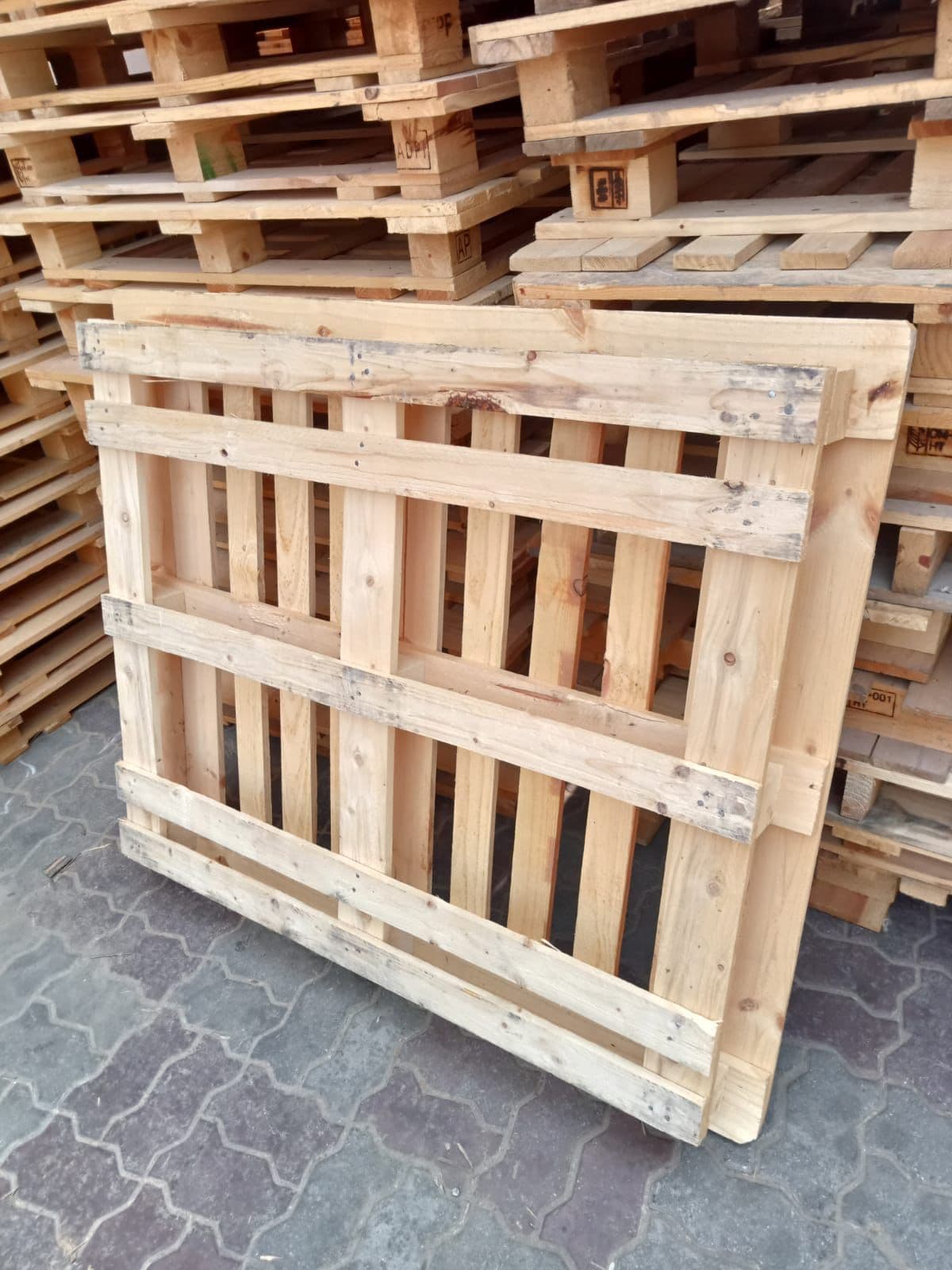
What is a wooden pallet?
The flat timber base that almost every shipment in the UAE moves on — what it is made of, how it is built, and which parts actually matter when you are buying.
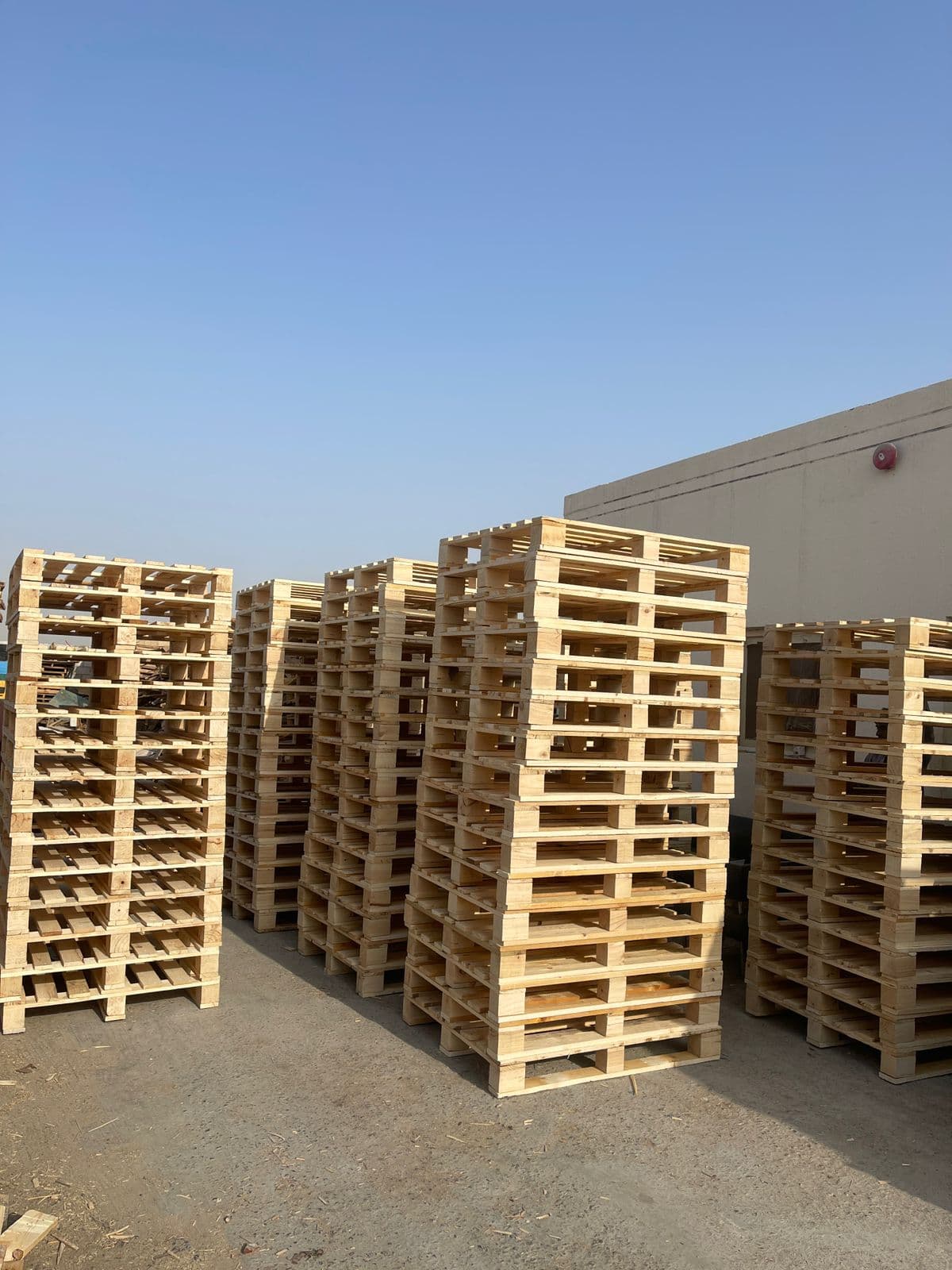
Standard pallet sizes in the UAE
Every size we hold, in centimetres and millimetres, plus how many fit a container, what suits racking, and when a custom size is cheaper than forcing a standard one.
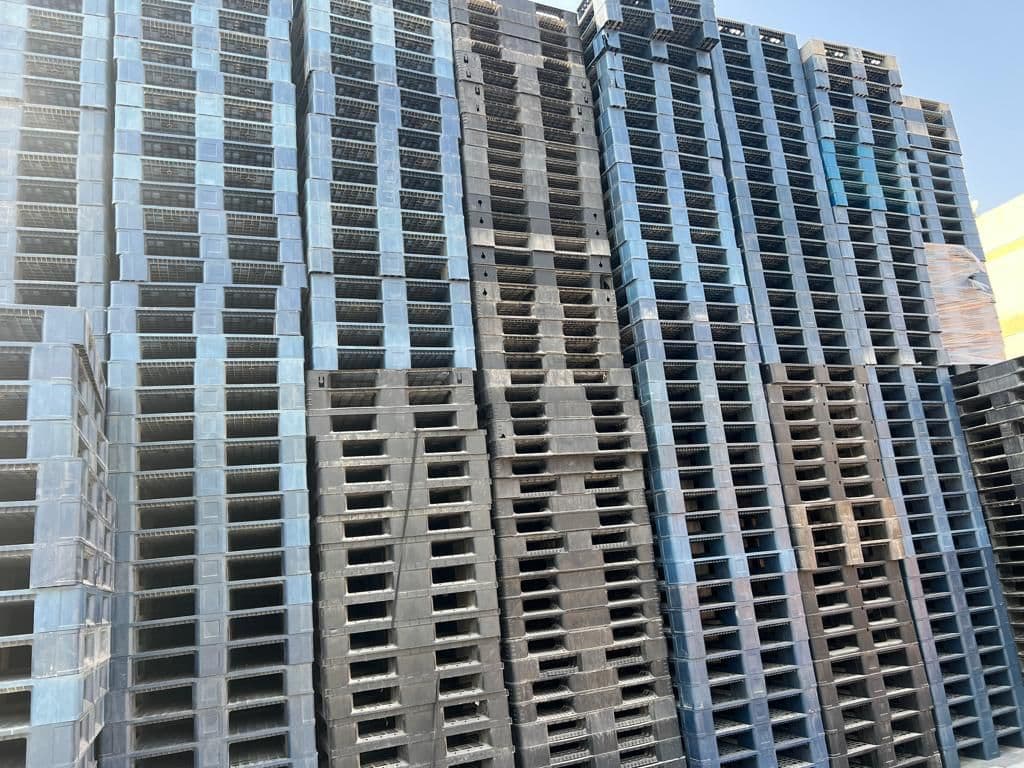
Wooden vs plastic pallets
Plastic is not better than timber. It is better at particular jobs — and the deciding factor is simpler than most comparisons make it look.
Ready to price it up?
Send the size, quantity and destination. We will confirm the build and the price, usually the same working day.