
What is a wooden pallet?
The flat timber base that almost every shipment in the UAE moves on — what it is made of, how it is built, and which parts actually matter when you are buying.
· 5 min read · Khan Pallets
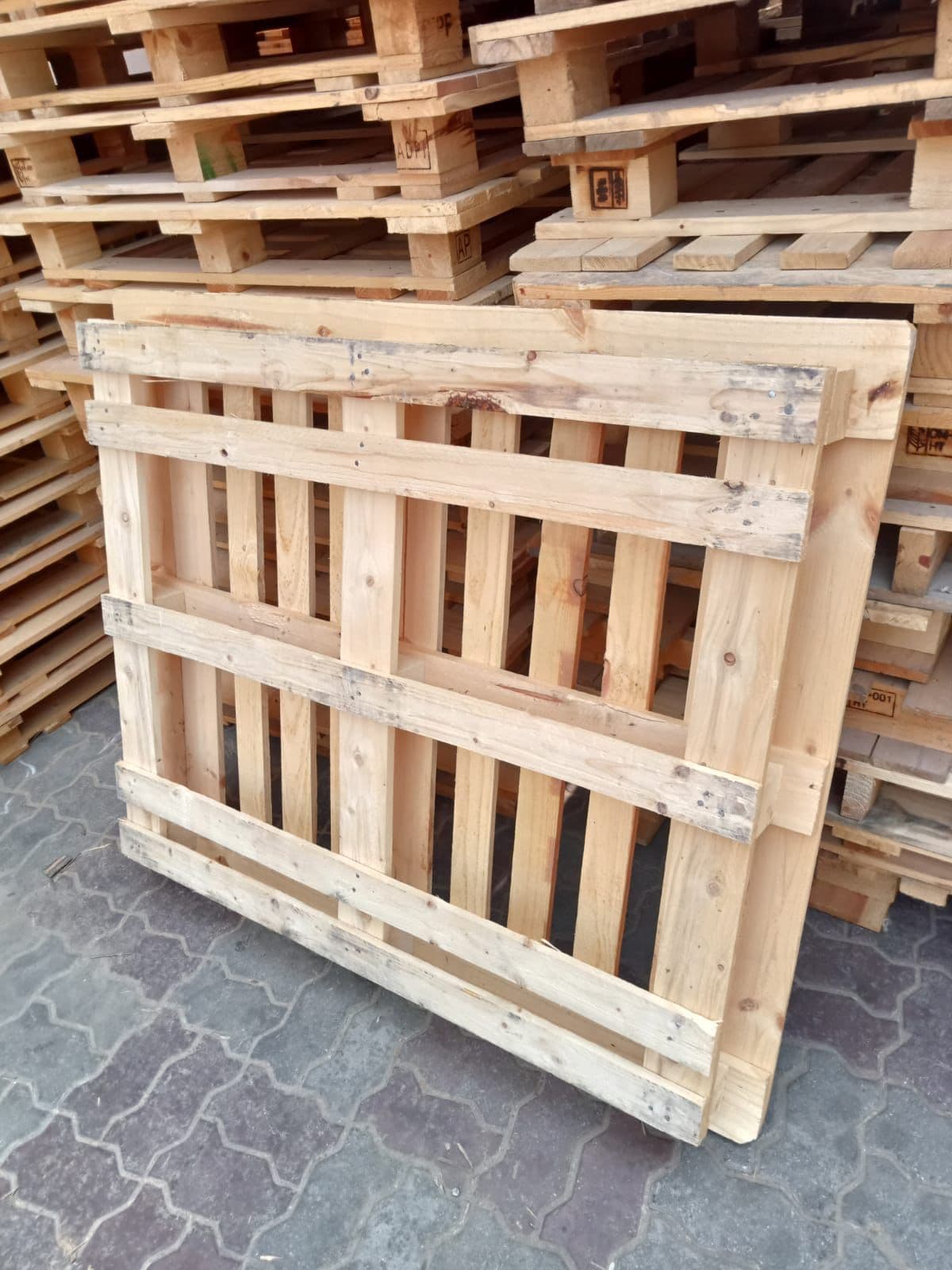
A wooden pallet is a flat timber platform that goods are stacked, strapped or wrapped onto so the whole load can be lifted and moved as one unit. The gaps underneath are not decoration — they are what a forklift or pallet jack puts its forks into. That is the entire idea: turn fifty awkward boxes into one thing a machine can pick up in four seconds.
It is worth understanding the parts before you buy, because almost every price difference between two pallets that look identical comes down to something on this page.
The parts of a wooden pallet
- Top deck boards — the surface the load sits on. More boards, or wider ones, spread weight better and stop cartons sagging between the gaps.
- Bottom deck boards — the boards underneath. A pallet without them is technically a skid, not a pallet.
- Stringers — three long timber runners that separate the decks on a stringer pallet.
- Blocks — nine solid timber blocks doing the same job on a block pallet.
- Bearers and notches — the structural timbers carrying the load between the decks, and the cut-outs a forklift enters through.
- Fasteners — nails, usually helical or ring-shank so they grip rather than work loose under vibration.
When we quote a build, we are really quoting these: how thick the deck boards are, how many there are, how they are spaced, and how many bearers sit underneath. A pallet rated for 500 kg and one rated for 2,000 kg can share the same footprint and look similar in a photograph.
Block pallets and stringer pallets
A stringer pallet uses three long runners. It is cheaper to build and it is the common choice where pallets stay inside one warehouse. Its limitation is entry: a forklift can normally only get in from two sides, unless the stringers are notched.
A block pallet uses nine blocks instead, which leaves a clear opening on all four sides. It costs more, carries more, and is what the Euro pallet (EPAL) standard is built on. In tight aisles or on automated lines, the extra cost usually pays for itself the first time nobody has to reposition a forklift.
Two-way and four-way entry
Four-way entry means a forklift can lift from any of the four sides. Two-way means front and back only. It sounds like a small detail until an operator has to swing a loaded truck around in a narrow aisle to approach a pallet from the correct face. If your racking, aisles or container loading is at all tight, specify four-way.
What wooden pallets are made from
Kiln-dried pine is the default across the UAE. It is light, consistent, takes a nail well and holds a heat treatment stamp cleanly. Hardwood costs more and is specified where the load is dense or the handling is rough — stone, steel, machinery. We hold both, cut to size at our own yard rather than buying finished pallets in.
Moisture content matters more than most buyers expect. Timber that has not been properly dried will warp as it dries out in a UAE summer, and a warped pallet does not sit flat in racking.
How wooden pallet manufacturing works
The process is short, and every step is somewhere a corner can be cut:
- 1Timber intake — sawn timber and blocks arrive and are stored under cover.
- 2Cutting — boards, bearers and blocks are cut to the dimensions of the build.
- 3Grading — split, twisted or bark-bearing pieces are pulled out before assembly, not after.
- 4Assembly — decks are nailed to stringers or blocks on a jig so every unit comes out the same size.
- 5Squareness and fastening check — a pallet that is 15 mm out of square will jam in automated racking.
- 6Heat treatment — only for export loads, to the ISPM-15 standard.
- 7Stacking and dispatch — banded into stacks and loaded.
Choosing a supplier
People search for wooden pallet manufacturers near me, and proximity does genuinely matter — but not for the reason most expect. It is not about the delivery charge. It is that a nearby yard can send you a sample before a bulk run, take a phone call about a load that turned out heavier than planned, and collect your empties on the same trip it delivers on. None of that works at distance.
The other thing worth checking is whether you are dealing with pallet wood suppliers or a finished-pallet importer. A yard that buys sawn timber and blocks, and cuts them itself, controls the board thickness, the moisture content and the lead time. One that imports finished pallets controls none of those and simply passes on whatever arrived.
- Ask whether they cut timber on site or import finished pallets
- Ask for the board thickness and bearer count, not just the footprint
- Ask whether heat treatment is done in-house or sent out — it decides your export lead time
- Ask what happens to the pallets when you are finished with them
New, used or recycled?
A new pallet is not automatically the right answer. For pallets that never leave your own site, graded second-hand stock does the same job at roughly half the cost — see used wooden pallets for how the grades work. New builds earn their price when the load is heavy, the destination is a port, or the pallet is going to a customer who will judge you on it.
How to specify one in six lines
- Footprint, in cm or mm — or the dimensions of the load if you are unsure
- Weight per pallet, honestly, including any overhang
- Two-way or four-way entry
- New or used
- Whether it leaves the UAE, which decides heat treatment
- Quantity, and whether it repeats
That is genuinely enough for a firm quote. If you want to know what moves the number after that, what drives pallet prices in the UAE goes through it factor by factor.
Where to next
Written by the team at Khan Pallets, the trading name of Saqer Al Khan Wooden Ind LLC — a wooden pallet manufacturer and supplier based in Al Sajaa, Sharjah, delivering across all seven emirates.
More guides
Keep reading
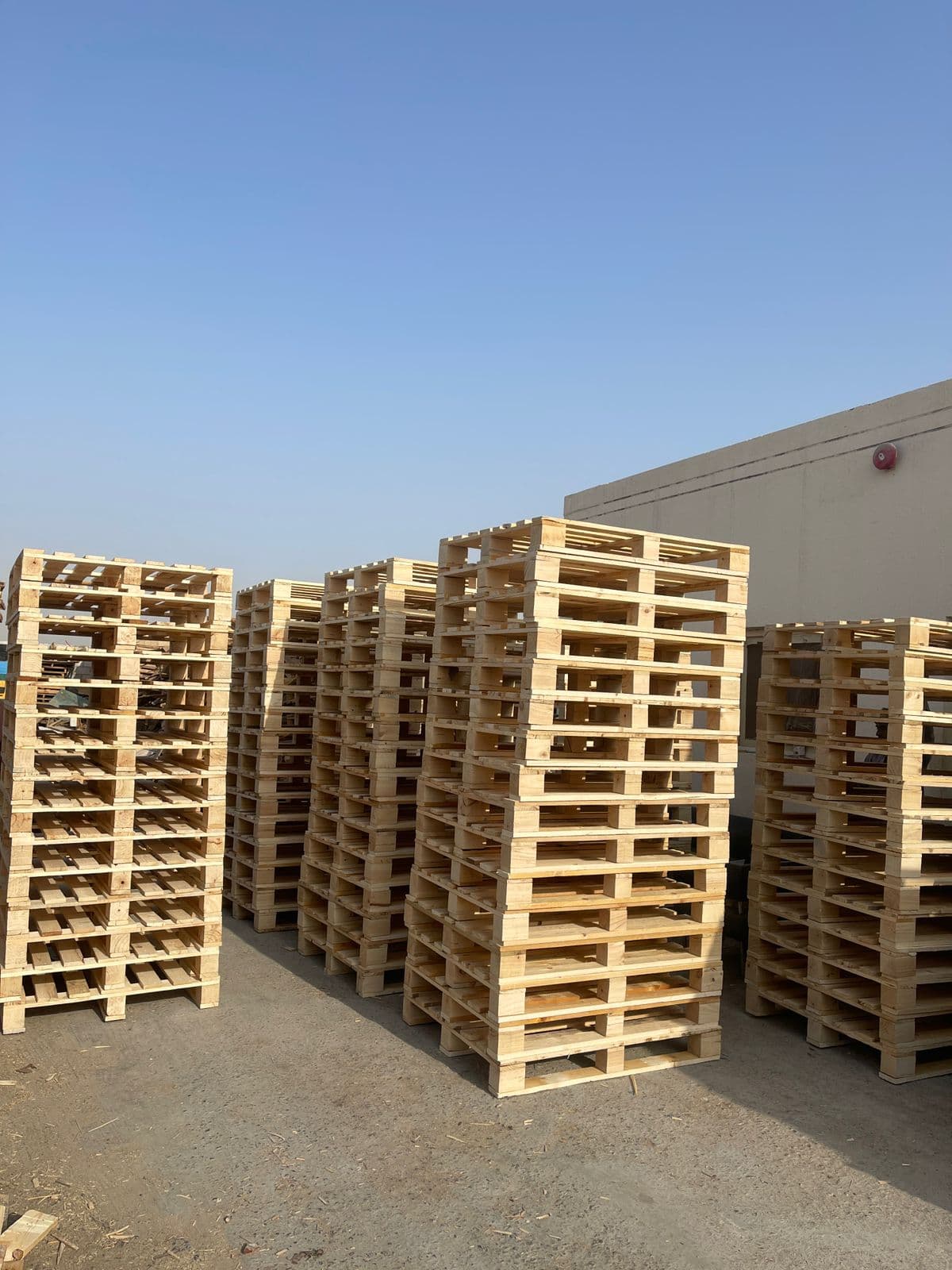
Standard pallet sizes in the UAE
Every size we hold, in centimetres and millimetres, plus how many fit a container, what suits racking, and when a custom size is cheaper than forcing a standard one.
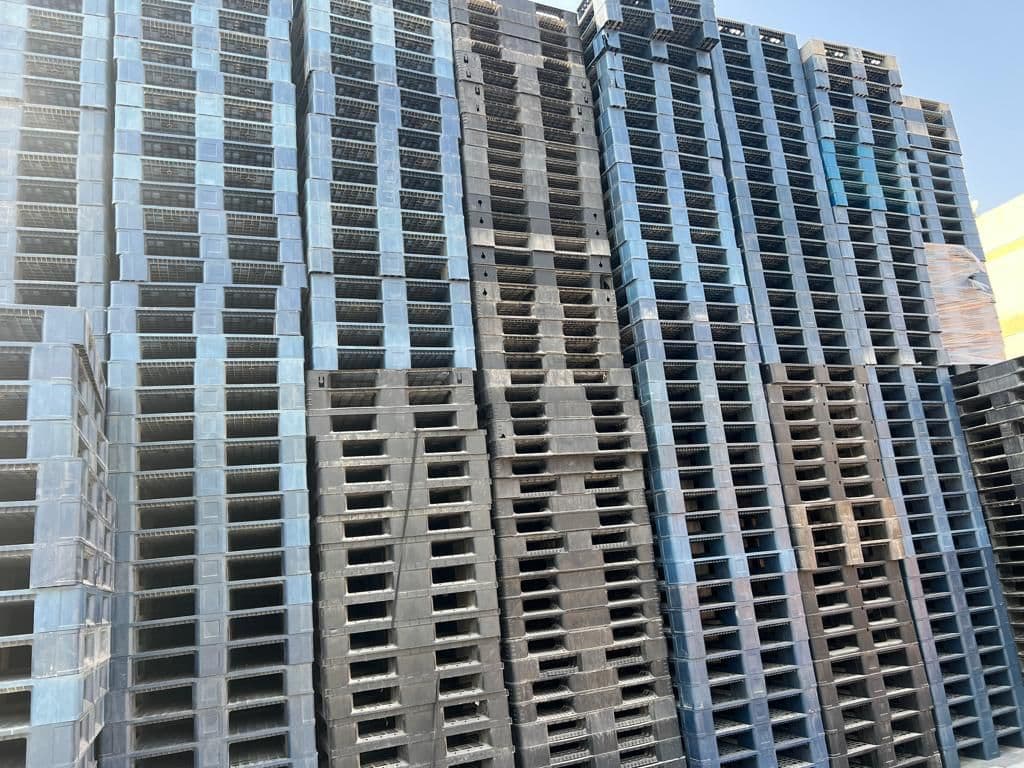
Wooden vs plastic pallets
Plastic is not better than timber. It is better at particular jobs — and the deciding factor is simpler than most comparisons make it look.
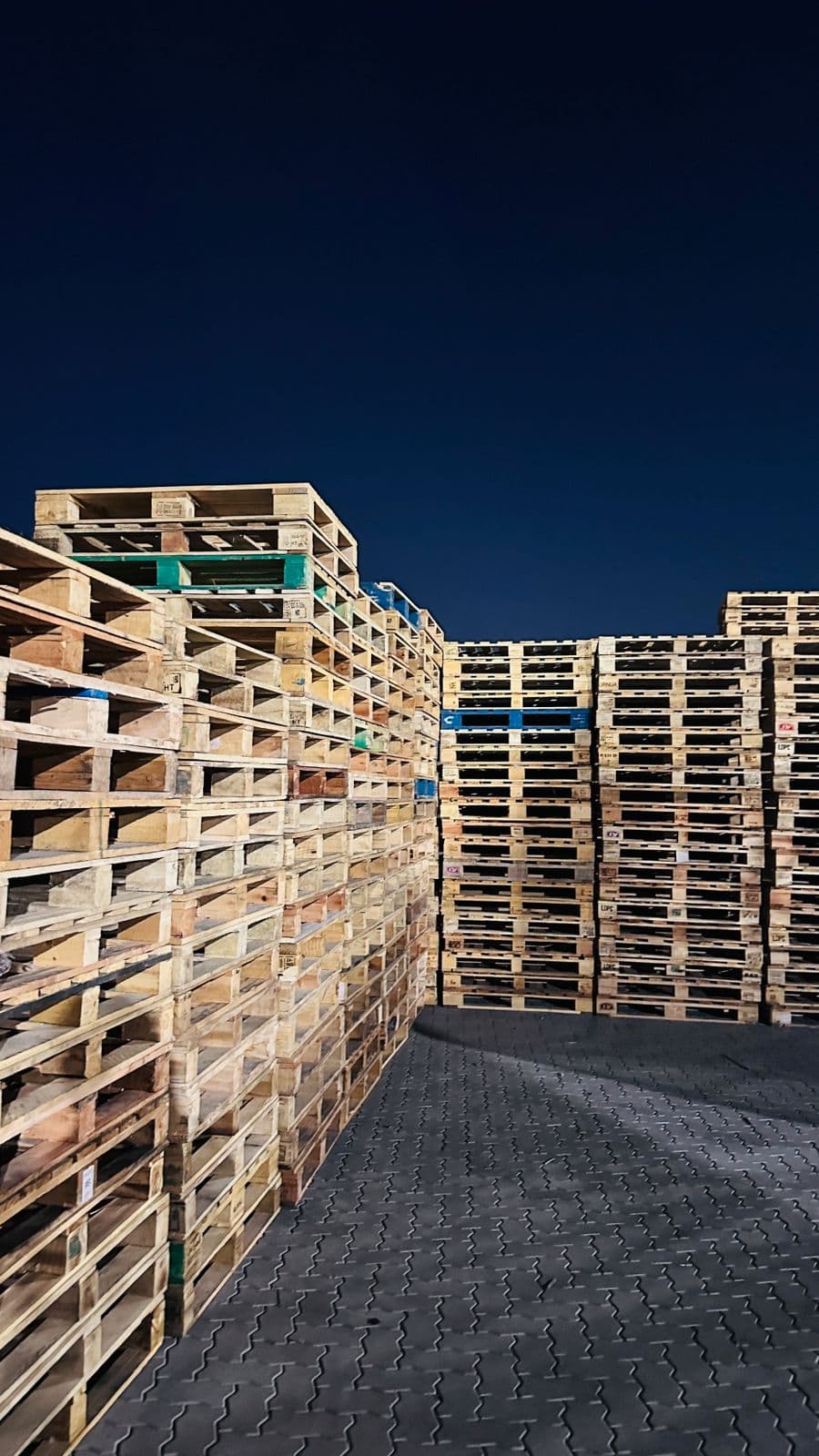
Export pallet requirements
What a pallet needs before it can leave the country, what the stamp on the side actually says, and the handful of avoidable mistakes that get consignments held at the port.
Ready to price it up?
Send the size, quantity and destination. We will confirm the build and the price, usually the same working day.